Finishing Towels
Finish the job with these soft microfiber towels that can absorb moisture while buffing away any swirls or residue.
FInishing Towels for the Final Steps of Car Detailing
Finishing towels are essential for achieving a flawless, professional-level finish on your car. Unlike standard towels or chamois, finishing towels are ultra-absorbent and lint-free, allowing them to quickly and effectively remove water without leaving streaks or water spots behind.
The ultra-soft, plush texture of finishing towels helps to prevent scratches and swirl marks, making them safe for use on all surfaces, including paint, glass, wheels, and chrome. So, if you want that immaculate showroom floor look, always end your washing session with a finishing towel and enjoy the pristine results.
Find Your Perfect Finishing Towels to Wrap Up the Job
From vinyl and stainless steel to paintwork and leather, we’ve got the best towel for the job. Use the filters on this page to hone in on the precise towel you need for specific finishes, paint conditions, and wheel types. You can also take advantage of specialized kits for leather maintenance, black paint jobs, graphic wraps, water spot removal, and plenty more.
Learn More: Drying How-Tos
-
How to Dry Your Car: Detailers' Tips & TechniquesMaster the art of drying your car with this comprehensive guide. Learn expert techniques and essential tools to achieve a spotless, streak-free finish that protects your vehicle's shine. -
Fastest Way to Dry Your Car: How to Use a BlowerThe fastest way to dry your car is by using the ProBlow Handheld Dryer & Blower. Achieve professional results and protect your vehicle from water spots and damage efficiently. -
Trending
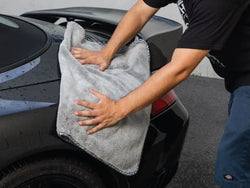
How to Properly Dry Your Car After WashingLearn effective techniques to dry your car after washing, preventing water spots and corrosion. Explore methods, tips, and answers to common car drying questions. -
How to use the Microfiber Towel Workhorse Color Code SystemLearn to use Chemical Guys Workhorse Microfiber Towels effectively with a color-coded system for different detailing areas, and get essential tips for proper washing and maintenance to prolong their use.
Frequently Asked Questions
You've washed, rinsed, and dried your car, so why does it still look a little... off? A few faint streaks here, a hazy spot there? That's where a finishing towel comes in. It's the last tool in your detailing arsenal, and honestly, it's the one that separates a good wash from a "wait, did you just get this detailed?" wash.
Absorbing Leftover Moisture
Even after a solid drying session, tiny pockets of water tend to hide in doorjambs, mirrors, gas caps, and trim lines. These spots are easy to miss with bigger Drying Towels, but they're exactly where water spots love to form once the sun hits them. A finishing towel mops up that last bit of moisture before it has a chance to dry into a spot.
Buffing Away Residue
Wax, sealant, and quick detailer spray; these products do their job, but they can leave a light haze if you don't buff it out properly. A finishing towel is built specifically for this kind of pass: soft enough not to scratch, absorbent enough to lift residue clean off the surface. It's the tool that turns a slightly cloudy panel into a clear, glassy one.
Delivering That Final Shine
Think of it like the last swipe of a squeegee on a window, except for your whole car. It's the difference between "clean" and "showroom clean." A good car finishing towel takes whatever work you put in with your wash and wax and locks in that glossy, streak-free look that makes the whole job feel complete.
Working Across Multiple Surfaces
Finishing towels aren't just for paint. They're just as useful on glass, chrome trim, wheels, and even interior surfaces like dashboards and consoles once you're doing a final once-over. Having one versatile towel that handles all of that without leaving marks behind saves you from juggling a dozen different rags.
We get it, a towel is a towel, right? Except when it comes to your paint, that's not quite true. Grabbing whatever rag is closest for your final wipe-down is a good way to undo hours of careful washing and polishing in about ten seconds flat.
Regular Towels Can Cause Micro-Scratches
Old bath towels, kitchen rags, and cheap shop towels are often made with coarser fibers or have seams that can drag grit across your paint. Over time, that's exactly how swirl marks show up under direct sunlight: those faint spiderweb scratches that seem to appear out of nowhere are often the result of years of using the wrong towel for the final wipe.
A Detailing Finishing Towel Is Built Differently
A dedicated detailing finishing towel is made from ultra-plush Microfiber Car Cloths, specifically designed to glide over paint, glass, and trim without dragging debris along. The fibers are engineered to trap dirt and lift moisture, not just push it around, which means less risk of grinding leftover grit into your clear coat.
Consistency Across Every Wash
When you use the same trusted final wipe towel car after car (or wash after wash), you get consistent, predictable results, no guessing whether this towel will leave lint, streaks, or scratches behind. That consistency matters even more if you're detailing multiple vehicles or running a side business, since customers notice quality (or the lack of it) immediately.
Protecting Your Investment
If you've spent money on ceramic coatings, sealants, or a fresh wax job, the last thing you want is a rough towel undoing that protection. A dedicated finishing towel protects the work you've already put in, rather than working against it. Given how much time and money go into proper detail, the cost of a quality towel is a small price to pay for peace of mind.
This one trips people up a lot, and fair enough, they look pretty similar at first glance. But drying towels and finishing towels are built for two different jobs in your wash routine.
Drying Towels Are Built for Volume
A drying towel's whole purpose is to soak up as much water as possible, as quickly as possible. These towels tend to have a longer, thicker pile, so they can pull moisture off big flat panels like the hood, roof, and trunk in just a couple of passes. Speed and absorption capacity are the priority here, not precision.
Finishing Towels Are Built for Precision
A finishing towel, on the other hand, isn't trying to absorb gallons of water; it's handling the small stuff. Think trim lines, mirrors, wheel wells, and any leftover haze from wax or detail spray. The plush, tightly-woven microfiber finishing cloth used in these towels is designed for gentle, precise buffing rather than bulk drying.
Using Them Together
Most detailers use both in sequence: a drying towel first to handle the bulk of the water, then a finishing towel to catch what's left and buff out any remaining residue. Skipping straight to a finishing towel on a soaking wet car just means you'll wear it out faster than it needs to be, since it'll be doing a job it wasn't designed for.
Different Textures for Different Purposes
Drying towels often have a twisted-loop or waffle-weave texture built for absorption, while finishing towels lean more toward plushness and density, prioritizing that swirl-free glide over sheer water capacity. If you run your hand across each one, you'll usually feel the difference right away.
Why the Order Matters
Using them in the wrong order, say, finishing before drying, means your finishing towel ends up doing double duty, soaking up water it wasn't built for and getting overloaded before it even gets to the detail work it's actually meant for.
With so many towel options out there, picking "just a towel" can honestly feel more complicated than it should be. Here's how to narrow it down without overthinking it.
Consider the Surface You're Working On
Different towels suit different jobs. A car wax removal towel needs a slightly denser weave to grab and lift product without smearing it back into the paint, while a towel for glass or chrome should be lint-free so it doesn't leave behind fuzz on reflective surfaces. Matching the towel to the task keeps your results consistent.
Pay Attention to Pile and Plushness
A plush, dense pile (like what you'll find in options such as the Happy Ending Edgeless towels or the Monster Extreme Thickness towels) tends to be gentler and more absorbent, which matters most on sensitive, high-gloss paint or ceramic-coated surfaces. The plusher the pile, the less friction transfers to the surface underneath.
Edgeless Designs Matter
Towels with stitched edges can occasionally catch and scratch delicate finishes, especially if the seam gets loaded with grit. Edgeless microfiber towels eliminate that risk entirely, which is why many detailers lean toward edgeless options for their final pass, particularly on darker paint colors where every imperfection shows.
Think About Pack Size and Use Case
If you're only doing your own car every couple of weeks, a 3-pack is plenty. If you're running a detailing side hustle or just going through towels fast, bigger packs (6-pack, 12-pack) save you from constantly reordering and make sure you always have a clean towel on hand.
Color-Coding for Organization
Many professional-grade towel lines use different colors so you can dedicate specific towels to specific tasks, one color for glass, another for wheels, another for paint, which helps avoid cross-contamination between dirtier and cleaner surfaces. This system becomes especially useful once your towel collection starts to grow.
Don't Overlook Thickness Variations
Some towels feature a dual-sided design, with a thicker weave on one side for absorption and a thinner, tighter weave on the other for buffing. Having that versatility built into a single towel can reduce the number of products you need to keep around.
Okay, you've picked your towel, now let's make sure you're actually using it the way it's meant to be used, because technique matters here more than people think.
Fold It Into Quarters
Folding your towel into quarters gives you multiple clean surfaces to work with as you go, instead of spreading dirt and residue back across the panel you just wiped. Each time a section gets dirty, you've got a fresh spot ready to go.
Use Light, Even Pressure
You don't need to scrub. Let the plush fibers of the towel do the work. Light, even pressure across the panel picks up moisture and residue without adding friction that can lead to swirls. Pressing too hard is one of the most common (and avoidable) mistakes people make during their final wipe-down.
Work in Straight Lines, Not Circles
Circular motions can create the appearance of swirl marks even on a well-protected surface. Stick to straight, front-to-back or top-to-bottom passes for a cleaner, more even result, and try to work with the car's natural panel lines rather than against them.
Flip and Rotate Often
As soon as one side of your folded towel feels damp or loaded with residue, flip to a clean section. Using the same soiled section over and over just moves grime around instead of removing it, which defeats the purpose of the whole exercise.
Don't Forget the Details
Run your towel along trim, mirrors, door handles, and wheel wells, the small spots that regular drying towels tend to miss. This is exactly where a dedicated finishing towel earns its keep, catching every last drop before it can dry up and leave a spot.
A quality towel isn't a one-and-done purchase; with the right care, it'll last through dozens of washes without losing its softness or absorbency.
Wash Separately From Regular Laundry
Microfiber towels should never go in with regular clothes or towels. Lint and fibers from cotton products can transfer over and get trapped in the microfiber, reducing its effectiveness.
Skip Fabric Softener
Fabric softener coats microfiber fibers with a residue that kills their absorbency, basically turning your premium towel into a regular one. Use a detergent made for microfiber, or a small amount of mild, dye-free detergent instead.
Use Cool or Warm Water, Not Hot
High heat can break down the synthetic fibers over time. Stick to cool or warm water cycles to keep the microfiber intact and effective.
Air Dry or Tumble Dry on Low
Skip high heat in the dryer too; it can melt or damage the fibers. Air drying or a low, no-heat tumble cycle keeps your towels plush and ready for their next job.
Retire Towels That Feel Rough or Stiff
If a towel starts feeling rough, stiff, or less absorbent over time, it's probably picked up product buildup that washing isn't fully removing anymore. At that point, it's better used for garage cleanup than for your paint.
At the end of the day, a finishing towel might be the smallest tool in your detailing kit, but it's doing some of the most important work, locking in that streak-free, swirl-free shine you worked for. Treat it right, use the right one for the job, and it'll keep your car looking sharp wash after wash.