Polishing Compound

Your paint tells a story of every drive. Road grit, automatic car washes, and careless wipes with a dirty towel leave behind swirl marks, fine scratches, and oxidation that no wax can hide. If your paint looks dull or hazy in direct sunlight, that is surface damage, and the only way to actually fix it is with a polishing compound.

3 products
  • 101
    X1 - Earn 21 Entries
    Regular price $21.99
    Sale price $21.99 Regular price
    Sold out
  • 25
    X1 - Earn 21 Entries
    Regular price $21.99
    Sale price $21.99 Regular price
    Sold out
  • 835
    X2 - Earn 539 Entries
    Regular price $269.99
    Sale price $269.99 Regular price $316.90
    SAVE 15% Sold out


What A Polishing Compound Does To Your Paint

A polishing compound works by removing a thin, controlled layer of your clear coat to level out imperfections. Unlike wax or sealant, which sit on top of the paint and temporarily fill defects, a compound physically eliminates them by abrading the surface to smooth it.

How Abrasives Work On Clear Coat

Every compound contains abrasive particles that cut into the clear coat during polishing. As these particles break down under pressure and heat, they shift from aggressive to fine, refining the surface as they work. This is called diminishing abrasive technology, and it allows a single compound to both cut and finish within the same working session.

The Difference Between Compounding And Polishing

Compounding uses heavier abrasives to remove deeper defects, such as scratches, oxidation, and heavy swirl marks. Polishing uses finer abrasives to refine the surface after compounding, eliminating any haze or light marks left behind. Some formulas combine both steps into a single formula, making corrections faster and more accessible for all skill levels.

What Defects A Compound Can Fix

A polishing compound removes swirl marks, fine to moderate scratches, oxidation, water etching, and UV haze. It cannot fix deep scratches that penetrate through the clear coat into the base coat or primer. For a full breakdown of scratch types and what each requires, see our guide on how to remove car scratches. If a scratch catches your fingernail clearly, it likely needs wet sanding or professional repair before compounding will make a meaningful difference.

Why Paint Correction Comes Before Protection

Applying wax or ceramic coating over uncorrected paint locks every defect underneath. The protection looks glossy, but the imperfections remain visible in direct sunlight. Correcting first gives you a genuinely flat, clean surface that holds protection better, reflects light more evenly, and looks sharper from every angle.

Best Polishing Compound For Paint Correction At Home

Choosing The Right Aggression Level For Your Paint

Selecting the right car polishing compound starts with an honest assessment of your paint condition. Using a compound that is too aggressive removes more paint than necessary. Using one that is too mild wastes time and leaves defects behind. Matching aggression to damage severity is what makes correction safe and predictable.

Light Defects: When One Step Is Enough

Paint with light swirl marks, fine scratches from regular washing, and mild dullness does not need heavy compounding. A one-step formula that combines cutting and polishing in a single pass is the most efficient choice. It removes surface-level damage and delivers a finished, glossy result without a separate follow-up polish step.

Moderate Defects: When Two Steps Produce Better Results

When paint shows moderate scratches, visible swirl marks under direct light, and oxidation that does not respond to a one-step product, a dedicated compound followed by a finishing polish gives better results. The compound removes defects, and the polish eliminates any haze left behind, delivering a deeper, cleaner finish overall.

Heavy Defects: When Maximum Cutting Power Is Needed

Paint with deep scratches, heavy oxidation, or 1200 to 1500 grit sanding marks requires a compound with maximum cutting power. These formulas use aggressive abrasives designed for hard paint finishes and set the surface up for final polishing. Applying a light polish to heavily damaged paint produces minimal improvement regardless of technique.

How Paint Hardness Affects Your Choice

Softer paint finishes correct faster and need less aggressive compounds to avoid over-correction. Harder finishes, common on many European and modern ceramic-coated vehicles, resist light abrasives and need stronger compounds to make real progress. Knowing your paint type helps you choose the right starting point without removing more clear coat than the job requires.

If your paint has scratches, swirls, or oxidation that wax cannot fix, a polishing compound is the right tool for the job. At Chemical Guys, compounds are formulated to cut accurately, finish cleanly, and set your paint up for the best protection results. Shop our full correction lineup and give your paint the correction it needs.

How To Use A Polishing Compound Correctly

Using a rubbing compound for car scratches correctly separates a clean, glossy result from a hazy, over-worked surface. Technique matters as much as product choice, and a consistent process keeps your correction safe across every panel.

Prepare The Paint Before You Start

Never compound over a dirty surface. Wash the vehicle thoroughly, then decontaminate with a clay bar to remove embedded particles that could cause additional scratching. Work on a cool surface out of direct sunlight. Heat causes compounds to dry out and break down too quickly, cutting work time short and making residue harder to remove cleanly.

Apply And Work The Compound

Apply 4 to 5 drops to a primed pad, spread across a 2-by-2-foot section at low speed, then increase to working speed. For a dual-action polisher, work at speeds 5 to 6 using moderate pressure for 2 to 3 passes until the product clears. For a rotary polisher, use only the machine's weight, without added pressure, to avoid burning the paint.

Inspect Under Direct Light Before Moving On

After working each panel, inspect under a direct light source before continuing. Our beginner's guide on how to polish your car covers the full inspection and finishing process in detail. This is the only reliable way to confirm whether defects have been fully removed or whether a second pass is needed. Moving through the entire vehicle without inspecting can mean unnecessarily repeating large sections.

Remove Residue And Assess Results

Remove residue immediately with a clean microfiber towel after each section. Dried compound residue left on the surrounding paint can introduce new scratches. Once the residue is cleared, assess the surface under light. If defects remain, work the section again before moving on. If the correction is complete, finish with a polishing step or apply your chosen protection product.

Top Picks From Our Polishing Compound Lineup

We carry a full range of compounds and polishes built for every correction scenario, from one-step solutions to multi-stage V-series systems. Here are three of our top picks across different correction needs to help you find the right starting point for your paint.

Maximum Cutting Power For Deep Defects

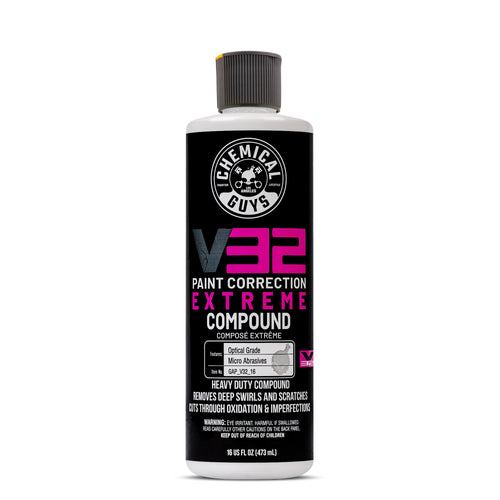
The V32 Optical Grade Extreme Compound is our most aggressive compound and the first step in our V-series correction system. It eliminates deep scratches, heavy paint defects, oxidation, and 1200 to 1500 grit sanding marks from super-hard paint finishes using optical-grade micro-abrasives that work with true-cut accuracy. There are no fillers, so the results you see are genuinely the results you get.

It works with both a dual-action polisher for safe cutting on any paint type and a rotary polisher for aggressive removal on harder finishes. Apply 4 to 5 drops to a primed pad, spread at low speed, then work at moderate pressure for 2 to 3 passes until the product clears. Adjust to a final speed of 1200 to 1800 RPM for optical clarity, then remove residue with a clean microfiber towel. It prepares the surface for final refinement with a lighter polish, such as V36 or V38.

One Step Correction For Light To Moderate Paint

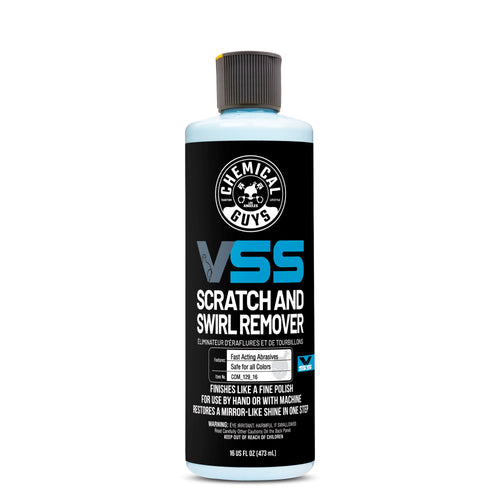
The VSS One-Step Scratch and Swirl Remover is our one-step solution for light to moderate swirls, scratches, and oxidation. It uses diminishing-abrasive technology to cut like a compound at the start, then transitions to a fine polish as the abrasives break down, delivering a mirror-like wet finish in a single pass. No follow-up polish step is required.

It removes defects, including 2500 grit sanding marks, and works on all paint types, clear coat, single-stage paint correction, and ceramic-coated finishes. It is silicone-free, filler-free, and body-shop safe. Apply 4 to 5 drops to a primed pad, work at speed 5 to 6 for 2 to 3 passes until the product clears, follow with a light-pressure finish pass, then remove residue with a clean microfiber towel.

Complete Two-Step Kit For Full Paint Restoration

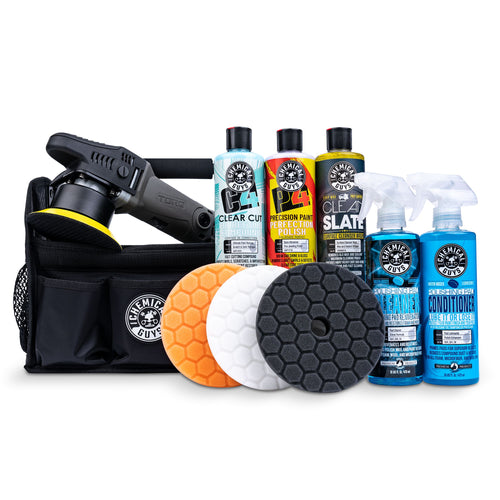
The TORQX Paint Correction and Perfection Car Polish Kit is our complete two-step correction system. It includes the TORQX Random Orbital Polisher with a 680-watt motor and 8mm dual-action orbital throw, C4 Clear Cut Correction Compound with an Orange Hex-Logic Medium-Heavy Cutting Pad, P4 Precision Paint Perfection Polish with a White Polishing Pad, a Black Finishing Pad, Pad Cleaner, Pad Conditioner, Clean Slate Surface Cleanser Wash, and a Quick Load Carrying Caddy.

C4 quickly cuts through swirls, scratches, and oxidation. P4 refines the corrected surface to a deep, mirror-like reflection. The dual-action polisher design prevents paint burning, making it safe for beginners while delivering results that match professional-level correction at home.

Why A Polishing Compound Belongs In Your Detailing Kit

Polishing compound is not just for show cars or severe paint damage. It is a core part of maintaining any vehicle's appearance over time. Here is why it earns a permanent spot in your kit.

  • Removes Real Defects: A polishing compound physically levels your paint surface, eliminating scratches, swirls, and oxidation. Wax and sealant only temporarily cover damage, and that coverage fades with every wash cycle.
  • Prepares Paint For Protection: Corrected paint provides a clean, flat surface for ceramic coatings, sealants, and waxes to bond properly. Protection applied over corrected paint lasts longer and performs more consistently than protection applied over damaged paint.
  • Works On All Paint Types: Whether your vehicle has single-stage paint, a clear coat finish, or a ceramic coating, there is a compound formula matched to that surface. The right product produces safe, controlled correction without overworking the clear coat.
  • Restores Appearance Between Details: A periodic one-step compound pass removes washing damage that accumulates between full correction sessions, keeping your paint sharper and cleaner with minimal time and effort between major details.
  • Accessible For Any Skill Level: Our compounds are formulated to work with dual-action polishers that prevent paint burning, making the correction approachable for beginners and efficient for experienced detailers. Correct technique and the right product are all you need for professional-grade results.
  • No Fillers, Real Results: Our formulas contain no fillers or silicones that temporarily mask defects. The clarity you see after compounding is a genuine correction that holds up wash after wash, not a cosmetic cover that disappears after the first rinse.

Keeping a polishing compound in your detailing routine means your paint stays in its best condition and every wax, sealant, or coating you apply works harder and lasts longer.

Frequently Asked Questions

Can I apply a polishing compound by hand without a machine polisher?

Hand application is possible on small areas but produces less consistent results. A dual-action polisher delivers more even pressure, better abrasive breakdown, and significantly faster correction across full panels.

How many times can I safely compound my paint?

This depends on clear coat thickness. Most vehicles can handle several correction sessions before the clear coat becomes dangerously thin. A paint depth gauge helps track remaining clear coat between jobs.

Should I clay bar before or after compounding?

Always clay bar before compounding. Clay removes embedded surface contamination that could cause additional scratching during polishing. Compounding over contaminated paint risks creating new defects while removing existing ones.

What pad should I use with a polishing compound?

Pad choice depends on the level of aggression. Heavier compounds pair with medium- to heavy-duty cutting pads for maximum defect removal. Lighter compounds and one-step formulas work well with medium polishing pads that balance cutting and finishing.

Can I use a polishing compound on black or dark-colored paint?

Yes, but dark paint shows compound residue and buffer trails more visibly. Work in smaller sections, keep the application consistent, and inspect under direct light frequently to confirm full residue removal before moving on.

How long should I wait after compounding before applying wax or sealant?

Allow the surface to cool completely after compounding before applying protection. For ceramic coatings, follow the product's cure time guidance. Rushing this step reduces the bond strength of the protection to the corrected surface.