Drying & Buffing
Reduce the risk of scratches with Chemical Guys super soft premium blended microfiber.
More about our Microfiber Cloths for Cars
Premium Grade Microfiber
Microfiber is a blend of Polyester and Polyamide, and the ratio of the two determines the softness of the fabric. While low-grade microfiber towels can be rough on your paint, Chemical Guys uses premium blended microfiber for an extra soft feel that drastically reduces your chances of scratching automotive surfaces.
Colored Towels
We've designed our car drying towels in specific colors on purpose. The rich colors like blue and purple highlight dirt—so you can see when it’s time to flip the towel (or grab a fresh one) to avoid scratches from the dirt captured on the towel.
Some of our multi-purpose towels come in a variety of colors, too, so you can designate a different colored towel for different purposes in your garage. For example, you won’t use the towel you cleaned your wheels with on your interior, for example.
What Does "Pile" Mean?
When we talk about towels, ‘long piles’ means fabric with longer fibers. They are designed for drying and absorb more moisture. They’re also more plush than short-pile towels, so they can be utilized as finishing towels.
Short piles are not as plush, so they’re better for all-around cleaning jobs like windows, compound/wax removal, and general spot cleaning. Short piles allow you to get into crevices and give you more scrubbing power.
For some of our dual-sided drying towels, you’ll get both. Use the thick side to soak up moisture from detail sprays and waterless wash solutions. Use the thin weave on the other side to buff away dried wax, sealant, and polish without fear of scratching the surface.
Learn More: Drying How-To's
-
How to Dry Your Car: Detailers Tips & TechniquesMaster the art of drying your car with this comprehensive guide. Learn expert techniques and essential tools to achieve a spotless, streak-free finish that protects your vehicle's shine. -
Fastest Way to Dry Your Car: How to Use a BlowerThe fastest way to dry your car is using the ProBlow Handheld Dryer & Blower. Achieve professional results and protect your vehicle from water spots and damage efficiently. -
Trending
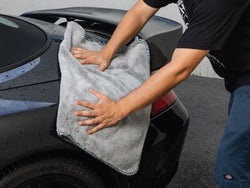
How to Properly Dry Your Car After WashingLearn effective techniques to dry your car after washing, preventing water spots and corrosion. Explore methods, tips, and answers to common car drying questions. -
How to use the Microfiber Towel Workhorse Color Code SystemLearn to use Chemical Guys Workhorse Microfiber Towels effectively with a color-coded system for different detailing areas, and get essential tips for proper washing and maintenance to prolong their use.
Frequently Asked Questions
A car dryer blower is a purpose-built tool that uses a concentrated stream of high-velocity air to clear water from a vehicle's surface without any physical contact with the paint. Unlike a household hair dryer, which generates heat that can damage automotive clearcoat, wax coatings, and rubber trim, a purpose-built automotive blower moves high volumes of air at temperatures safe for all automotive surfaces. Our ProBlow High Flow Professional Handheld Dryer and Blower is built around this principle: a 1000-watt motor drives an intense jet stream of air that dries any wet surface, clears crevices, and eliminates the risk of streaks and water spots from towel contact.
Why Contactless Drying Protects Paint The Way Towels Cannot
Every time a towel contacts paint, there is a friction exchange. Even a premium microfiber towel with a deep pile and properly finished edges introduces some physical contact with the clearcoat. On a perfectly clean, freshly rinsed surface, that contact is minimal. But in the real world, rinse water carries trace particles, micro-grit from the wash, and residual debris that a towel drags across the clearcoat during every drying pass. A blower eliminates that contact entirely by using directed airflow to push water off the surface rather than absorbing it with fabric. No contact means no friction, no debris transfer, and no swirl risk on the final surface of the detail.
The Zones That A Towel Simply Cannot Reach
Door jambs, mirror housings, fuel cap recesses, badge crevices, grille openings, windshield wiper bases, and sunroof channels all trap water that drains out minutes after a wash appears finished, leaving visible drip streaks down panels that were just towel-dried. Directing a concentrated airflow stream into these recesses clears standing water before it can migrate onto dry surfaces. This is not a supplementary step. This step determines whether the car stays dry for more than two minutes after the towel is put away.
This tool does not replace a microfiber towel. It works in a deliberate sequence to produce a result that neither can alone, leaving the vehicle completely dry, spot-free, and ready for any post-wash protection. Understanding where in the drying process the blower delivers the most value is key to the combined approach's effectiveness.
Using The Blower After The Rinse And Before The Towel
Running a blower across all flat panels immediately after the final rinse sheets the bulk of surface water off before a towel makes contact. This pre-towel pass reduces how saturated the towel becomes on the first panel, maintaining water-holding capacity across more panels before it needs to be wrung out. Our Drying Towels feature deep-pile construction and high-capacity microfiber blends to efficiently handle residual surface water after a blower pre-pass reduces the total load.
Using The Blower After Toweling To Eliminate Drips
Even after a thorough towel-dry, water continues to migrate out of closed body gaps for several minutes. Running the blower along door jambs, mirror bases, trim seams, and sunroof tracks after the towel pass clears this residual water before it drips. One post-towel blower pass adds less than two minutes to the drying routine and eliminates the most common visible failure point in a home wash.
How The Blower Handles Wheels And Tires
Wheel barrels, lug nut recesses, spoke channels, and the gap between the tire bead and the wheel rim trap water that a drying towel cannot reach without risking cross-contamination of the towel with brake dust. Directing our ProBlow into these zones clears standing water from the barrel and spoke areas without requiring towel contact near the vehicle's heaviest contamination zone. Our Finishing Towels handle the final panel work, while the blower manages areas that would otherwise reintroduce contamination onto a clean microfiber cloth.
An automotive blower is engineered specifically for car surfaces. A household hair dryer is not. The differences between them go beyond airflow volume and affect paint safety, surface compatibility, and the physical logistics of drying a full vehicle.
Temperature Control And Clearcoat Safety
Household hair dryers generate heat because hair requires warmth to dry effectively. That same heat applied to automotive clearcoat, wax, or ceramic sealants softens protection layers, degrades sealant durability, and accelerates the drying of waterborne contaminants directly onto paint rather than giving them time to be cleared. Automotive blowers generate high-volume, low-temperature airflow that efficiently moves water off the surface, allowing coatings and wax layers to remain intact without thermal risk.
Airflow Volume And Nozzle Design
A household hair dryer concentrates its output at a single small aperture. Covering a full-size vehicle with that aperture takes longer and requires holding the dryer closer to the surface, increasing heat exposure time per area. Automotive blowers move larger volumes of air through nozzle attachments designed for crevices, panel edges, and flat surfaces. Higher airflow volume, combined with purpose-specific nozzle geometry, means less time per panel and more consistent results across the entire vehicle.
Why The Drying Tool Determines Coating Lifespan
Ceramic coatings and sealants require time to fully cure, and conditions during that window directly affect how long the protection performs. A household hair dryer concentrates heat in one spot, creating uneven curing conditions and weaker adhesion. A purpose-built car blow dry system moves air rather than concentrating heat, giving the protection layer consistent drying conditions across the full treated surface. The drying tool used at every subsequent wash determines whether that protection investment performs for its full intended lifespan.
The most effective drying routine pairs a blower with premium microfiber towels in a specific sequence. Each tool handles its job best, and the combination eliminates the weaknesses of either tool used alone.
These steps apply to the full vehicle-drying routine in every wash session.
- Work On A Cool Surface In Shade: A vehicle surface hot from direct sun evaporates water faster than either the blower or towel can clear it, leaving concentrated mineral deposits. Position the vehicle in shade and allow the surface to cool before beginning the drying sequence.
- Blower Pass On All Crevices: Run the blower immediately after rinsing along all door jambs, mirror bases, badge recesses, grille openings, and window seals, then wipe the area with a towel before touching the paint.
- Towel Flat Panels First: Use a large-format drying towel on the roof, hood, trunk, and door panels while the crevice water cleared by the blower has already exited the gaps and cannot migrate back onto freshly dried paint.
- Check Panel Edges For Drip Lines: After toweling, visually inspect the lower edge of each door panel, the bottom of the trunk, and the rear bumper seam for any water beginning to drip from gaps. Address these with a targeted burst of airflow before they reach the towel-dried surface below.
- Finishing Towel For Final Detail: Use a finishing towel for a final light pass across all painted surfaces to capture any remaining trace moisture and prepare the surface for any post-wash protection application.
- Wheels & Tires Last: Direct the blower into wheel barrels, lug nut recesses, and the tire-wheel interface to clear standing water from these zones before applying any tire dressing, ensuring the protectant adheres to a dry surface.
This sequence eliminates every source of post-dry dripping and gives the finishing towel a genuinely dry surface to work with, rather than one still releasing water from internal body gaps.
Not every blower setup delivers the same result on a full vehicle detail. The variables that determine whether a blower genuinely improves the drying routine come down to airflow output, nozzle versatility, and the tool's practical integration into a mobile wash setup.
Airflow Output And Coverage Efficiency
The primary metric when choosing any blower is how much air volume it moves per minute and how efficiently that airflow is directed across different surface types. Our ProBlow's powerful 1000-watt motor delivers enough airflow to sheet standing water off a hood panel in a single slow pass and to push into narrow crevices without the nozzle pressed directly against trim or painted surfaces. A lower-output tool requires multiple passes per area, extending drying time and increasing the risk of redepositing contaminated rinse water on already-cleared surfaces.
Nozzle Attachments For Different Surface Zones
A single fixed nozzle significantly limits where the blower can be used effectively. Flat panel nozzles spread airflow across wide surfaces for efficient sheeting. Narrow jet nozzles concentrate flow into door jambs, badge recesses, and wheel barrel openings where standing water collects most persistently between wash sessions. A blower setup that includes multiple nozzle options covers the entire vehicle without requiring repositioning or compromising technique across different surface geometries.
Integration With The Full Drying Lineup
Our ProBlow is engineered to integrate into a complete drying system rather than replace every stage of it. The 10-foot extra-long cord provides enough mobility to work around a full-size vehicle without repositioning the power source, and the 3.3-lb lightweight body reduces hand fatigue throughout a complete drying session. Its rubber tip means that even on accidental contact with a panel, the tool will not scratch the paint. Paired with the Woolly Mammoth Microfiber Drying Towel (36" x 25", 80/20 blend, close-to-a-gallon capacity) for high-volume panel drying and the Waffle Weave Gray Matter for fast single-pass glass work, the ProBlow handles all contactless stages while our drying towel lineup manages every surface the blower cannot absorb.
Most drying-stage paint damage stems from a predictable set of habits that a blower can directly address. Knowing which mistakes the blower eliminates is what makes the case for adding it to a regular wash routine rather than treating it as an occasional luxury.
- Wiping Crevice Water Onto Dry Panels: Water released from door jambs and body seams after toweling drips onto just-dried panels. A blower clears these zones before the towel stage, preventing re-wetting.
- Extra Towel Passes Around Trim & Badges: Forcing a towel into tight spaces around badges and trim seams risks paint contact at angles that exceed safe limits. A blower reaches these zones without contact.
- Applying Tire Dressing To Wet Tire Surfaces: Tire dressing applied over surface water dilutes the formula and produces uneven, short-lived results. A blower clears the tire-wheel interface and sidewall surface in seconds, preparing the rubber for direct contact with protectant.
- Leaving Water On Panel Edges Overnight: Water trapped in body seams and panel edges overnight accelerates surface oxidation and the formation of mineral deposits on unpainted edges. A post-dry blower pass eliminates this standing water before it can sit.
- Skipping The Blower On Convertible Tops & Sunroofs: Convertible fabric tops and sunroof channels retain water in the fabric weave and channel seams long after toweling appears complete. A blower passes through these zones, preventing water from slowly releasing and staining the rear window or lower panels below.
- Drying In Direct Sunlight: Direct sun accelerates water evaporation before a towel can absorb it, concentrating mineral deposits faster than the drying process can clear them. A blower speeds the drying stage enough to make shade-drying practical even on time-limited wash sessions.
At Chemical Guys, our complete drying lineup, from the high-capacity plush towels that handle bulk water removal to the finishing microfiber cloths that deliver the final surface result, is designed to work alongside the ProBlow for a complete, contact-minimized drying system that gives every driver a repeatable process rather than a collection of individual tools.