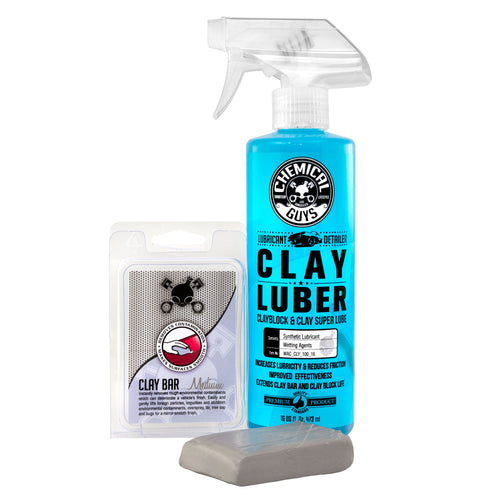
Once you understand what claying does, the next step is choosing a clay bar kit that matches your vehicle’s condition and your experience level. Not all paint contamination is the same, and using the right setup helps you remove bonded debris safely while keeping the process controlled and predictable.
What Makes A Car Clay Bar Kit Different
A car clay bar kit combines clay and lubrication, designed to work together. Instead of piecing products together, kits give you the right balance of glide and cleaning power, reducing the risk of marring and improving overall consistency.
Light Vs Medium Duty Clay Options
Clay bars come in different grades for a reason. Light-duty clay is ideal for newer or well-maintained paint with minor contamination. Medium-duty clay is better suited for vehicles that haven’t been clayed regularly or are exposed to harsher driving conditions.
Matching Clay Strength To Paint Condition
Choosing the wrong clay strength can slow you down or create unnecessary risk. Paint that feels slightly rough usually needs light claying, while heavily contaminated paint benefits from more cleaning power. Understanding this balance is key to finding the best clay bar kit for your situation.
Why Lubrication Matters During Claying
Lubrication is critical during the claying process. It creates a barrier between the clay and the paint, allowing contaminants to be lifted without dragging across the surface. A proper clay setup always prioritizes glide over pressure.
Avoiding Damage With The Right Setup
Using clean clay, plenty of lubricant, and the correct clay grade helps protect your finish. Exploring our Clay Bars Collection makes it easier to choose the right option for your vehicle and avoid unnecessary trial-and-error.
Prep makes the difference you can see and feel. At Chemical Guys, clay bar kits are built to safely remove bonded contamination and set your paint up for better protection. Choose a clay bar kit that fits your routine and make surface prep a step you can rely on, not skip.
When To Use A Clay Bar Kit In Your Detailing Routine
Understanding where claying fits into your routine is just as important as knowing how to do it. A clay bar kit is not an every-wash step, but when used at the right time, it plays a major role in improving surface quality and overall detailing results.
Claying Before Waxing Or Sealing
Claying should always come before applying wax or sealant. Removing bonded contaminants allows protection products to spread evenly and bond properly, helping maintain consistent coverage and improving durability over time.
How Claying Supports Paint Correction
Claying is a key prep step before polishing. By removing surface contamination first, you reduce the chance of dragging debris during correction and make polishing more effective. Clean paint allows abrasives to work more evenly.
How Often You Should Clay Your Vehicle
Most vehicles benefit from a clay bar treatment once or twice a year, depending on driving conditions and storage. Vehicles exposed to heavy traffic, industrial areas, or harsh weather may require more frequent attention.
Signs Your Paint Needs Claying Again
Rough texture after washing, reduced gloss, or protection that no longer performs as expected are common indicators. If paint doesn’t feel smooth even after a wash, it’s usually time to clay again.
Avoiding Overuse
Claying too often isn’t necessary and can wear down the surface over time. That’s why using the right clay strength and limiting claying to when it’s truly needed helps preserve your finish while still maintaining smooth results. When claying is used strategically, it becomes a powerful maintenance tool rather than an overused step. Timing it correctly keeps your detailing routine efficient and your paint in its best possible condition.
Getting The Best Results From An Auto Clay Bar Kit
Once clay feels familiar, small technique choices make a big difference in results. Keeping the process controlled and repeatable helps protect your paint and ensures every session delivers consistent improvements.
- Proper Clay Storage: Store clay clean and sealed between uses to prevent contamination, and discard it immediately if dropped, since embedded debris can compromise paint safety during future claying sessions.
- Panel By Panel: Work one panel at a time to maintain consistent lubrication, even pressure, and full coverage without rushing or overlooking areas that may still contain bonded contaminants.
- Extra Lubrication Focus: Heavily contaminated areas benefit from more lubricant rather than more pressure, allowing the clay to glide safely while gradually lifting stubborn debris from the surface.
- Gentle Hand Pressure: Clay should glide lightly across paint with minimal pressure, letting the material do the work while reducing the risk of marring or unnecessary surface stress.
- Post Clay Protection: After claying, paint is exposed and should be protected with wax or sealant to maintain smoothness and help preserve the results of proper surface preparation.
- Confidence Through Repetition: Regular, careful practice helps you recognize when a surface is clean, improving control and efficiency while making claying feel like a natural part of your detailing routine.
When these habits become part of your workflow, claying stays safe, predictable, and effective, delivering smoother paint and better results every time you detail.